Generic selectors
Exact matches only
Search in title
Search in content
Post Type Selectors

Category: News

Micronizing ocean plastics threaten sea turtle populations, ocean life cycle

This loggerhead post-hatchling was rehabilitated and released by the Loggerhead Marinelife Center. The vial contains plastic that was excreted by the sea turtle during its stay at LMC in 2017. Photo provided by Loggerhead Marinelife Center.

Ingestion of degrading ocean plastics likely poses a substantial risk to the survival of post-hatchling sea turtles because the particles can lead to blockages and nutritional deficiencies, according to new research from Loggerhead Marinelife Center and the University of Georgia. This puts the survival of all sea turtle populations at risk, because sea turtles may take decades to become sexually mature. The study also suggests that micronizing plastics could have tremendous negative implications for the ocean’s food web.

“We may be in the early phases of the first micronized plastic waste-associated species population decline or extinction event,” said co-author Branson W. Ritchie, a veterinarian with more than 30 years of experience in exotic and wildlife medicine and the director of technology development and implementation for the UGA New Materials Institute. “But, an even bigger issue is what micronizing plastics are doing to the ocean’s ecosystem. As ocean plastics continue to micronize, smaller and smaller particles are being consumed by the smallest creatures in our oceans, which compromises the entire food chain, because the plastic in these animals inhibits their ability to uptake the nutrients they need to survive. If the level of mortality we have observed in post-hatchling sea turtles also occurs for zoo plankton, baby fish and crustaceans, then we will witness a complete disruption in our ocean life cycle.”

The researchers collected 96 post-hatchling sea turtles that had washed back onto the beaches along a stretch of Florida’s coastline between Vero Beach and Lake Worth. The area is just south of the Archie Carr National Wildlife Refuge, named for the researcher who spurred the sea turtle conservation movement, and is part of the largest rookery in the United States for loggerhead and green turtles. More than 90 percent of the U.S. loggerhead population nests in Florida, said study co-author Charles Manire, a veterinarian who is director of research and rehabilitation for Loggerhead Marinelife Center.

Nearly half of the 96 recovered turtles were rehabilitated by LMC and released back into the ocean. During their time in rehabilitation, all passed some amount of plastic, said licensed veterinary technician Samantha Clark, a co-author who cared for the turtles at LMC. The remainder of the collected turtles died and 27 of these were examined for the study. Ninety-three percent had some amount of ingested plastic particles in them, leading the team to theorize that many died due to blockages or nutritional deficiencies associated with plastic ingestion.

“Sea turtles are known to mistake ocean plastics for prey, like crab or fish eggs, or in the case of larger sea turtles, floating plastic bags for jellyfish,” Clark said.

“Our findings suggest that far fewer post-hatchlings may be surviving long enough to reproduce. This has devastating implications for the seven species of sea turtles struggling to survive,” said Manire. “If other sea turtle populations are experiencing similar mortality rates, we predict that there will be insufficient numbers of sea turtle hatchlings reaching sexual maturity to offset natural and other human-associated losses.”

Historically, researchers have estimated that only one in 1,000 survives long enough to fully mature, but some recent estimates have suggested that number may be one in 10,000.

As plastic waste has accumulated in the marine environment, there has been an increase in the reports describing ingestion of plastics by sea turtles. Plastic is now the most common form of marine debris. Globally, at least 690 marine species, including sea turtles, seabirds, seals, sea lions, whales, fish and invertebrates, have reportedly become ill or died following entanglement in or ingestion of marine plastics.

The study team made another remarkable discovery: Once ingested, the plastic particles may continue to deteriorate to a size so small that it has never been documented or described previously for ingested particles. Using Raman spectroscopy and atomic force microscopy, the team characterized both the types of plastics and the sizes of the particles they found.

“We found particles ranging from millimeter-sized fragments to nanoparticles that measured on average 52 nanometers, and the smallest fragments we found measured 5 nanometers,” said Jason Locklin, director of the UGA New Materials Institute and a co-author on the study. “The smaller these particles are, the more unstable they become.”

“Of these larger mesoparticles, 54.1 percent of what we found were polyethylene and 23.7 percent were polypropylene,” said lead author Evan White, an assistant research scientist at the New Materials Institute who analyzed the particles. “Polyethylene is the most common plastic and is primarily used for packaging, especially food packaging. Polypropylene is the second most-commonly produced plastic and has a wide variety of uses, including food packaging.”

For examples of scale, microparticles include pollen, flour or powdered sugar. A nanometer is one-billionth of a meter; a human hair is about 80,000 to 100,000 nanometers wide.

The study was funded in part by the RWDC Environmental Stewardship Foundation, which has partnered with the UGA New Materials Institute to research and develop bio-based, fully biodegradable plastics.

The study team also included Shunli Wang, of the New Materials Institute, and UGA undergraduate Benjamin Crawford. The study, titled “Ingested Micronizing Plastic Particle Compositions and Size Distributions within Stranded Post-Hatchling Sea Turtles,”was published in Environmental Science and Technology.

UGA to test first fully biodegradable plastic straw

A research team that includes partners from the University of Georgia New Materials Institute and the RWDC Environmental Stewardship Foundation will develop a fully biodegradable plastic straw thanks to an award from Singapore’s Temasek Foundation Ecosperity.

The $719,000 award represents the top prize in Ecosperity’s inaugural Liveability Challenge and was presented to RWDC Industries in July in Singapore. UGA researchers, graduate students and a UGA alumnus, working with RWDC Foundation funding, synthesized a food contact polymer that they will now attempt to develop into a commercially viable straw, which RWDC would then bring to market.

The next step is for RWDC and the New Materials Institute to create prototypes. Then they must prove the straws can be manufactured consistently, produced at a scale to meet global demand and are fully biodegradable in soil, fresh water and marine water. Testing largely will be conducted in a New Materials Institute laboratory built with RWDC grant funding.

PHA resin is bio-based and fully biodegradable. The formula will be used to create a prototype for the world's first fully biodegradable plastic straw. Photo by UGA/Dorothy Kozlowski.

Few non-plastic alternatives

Currently, there are few non-plastic straw alternatives available to consumers. Many plastics branded as “biodegradable” are made from plant-based material called polylactic acid, or PLA. PLA-based plastics are compostable in limited environments, but they do not fully degrade outside of these settings.

“Plastics made from PLA only degrade in industrial compostable settings under high temperature and humidity conditions,” said Jason Locklin, director of the New Materials Institute and a professor in the Franklin College of Arts and Sciences department of chemistry, and the College of Engineering, who worked on the project. “Other types of plastic, which are petroleum-based, last forever. Less than 10 percent of these plastics are recycled. The 90 percent that aren’t recycled will ultimately fragment over time, and as micronized plastic, can end up in our soil, rivers and oceans—forever.”

The team’s biodegradable straws are based on a proprietary, bio-based resin in the class of polymers called polyhydroxyalkanoates, or PHAs.

Effective environmentally friendly straws

For the PHA-straw to be a viable product in the marketplace, it will have to perform as well as the plastic straws currently in use. It must also be cost-effective over its entire life cycle, including disposal, said Branson Ritchie, director of technology development and implementation for the New Materials Institute, and a distinguished research professor at UGA.

“The PHA-straw is an initial step toward our shared goal, with RWDC, of replacing single-use, petroleum-based plastics with plastics made from our biodegradable resins,” Ritchie said. “We can tweak our formulas and expand our technology on a product-by-product basis. This keeps a manufacturer’s costs down because they don’t have to reinvent their processes, and this facilitates their ability to quickly produce environmentally-friendly plastic products.”

“We have positioned the New Materials Institute to succeed in the critical step of translating these technologies beyond the laboratory scale,” Carraway said. “This straw will be the first of our fruits from these endeavors and the first product from what we view as a long-term partnership.”

The UGA New Materials Institute is committed to preventing waste through the design of materials and systems that adhere to Green Engineering principles. The Institute partners with industry and businesses to design materials for their use that are bio-based, fully biodegradable, or completely recyclable, and safe for people, animals and our planet. In addition, it works with businesses, governments, foundations and other organizations to redesign systems so that they generate less waste and promote circularity in materials management. The New Materials Institute is also shaping the future by training the next generation of scientists and engineers on the importance of considering Green Engineering design principles in everything they do.

Partnership

RWDC provided a substantial grant in order to quickly boost the New Materials Institute’s capabilities and position it for fast-tracking development, testing and illustration of the scalability necessary to create products from the bio-based resins we have co-developed, said Daniel Carraway, a scientist, inventor and entrepreneur who co-leads RWDC Industries and its foundation. Carraway earned his doctorate in forest biotechnology from UGA in 1996.

“We have positioned the New Materials Institute to succeed in the critical step of translating these technologies beyond the laboratory scale,” Carraway said. “This straw will be the first of our fruits from these endeavors and the first product from what we view as a long-term partnership.”

The UGA New Materials Institute is committed to preventing waste through the design of materials and systems that adhere to Green Engineering principles. The Institute partners with industry and businesses to design materials for their use that are bio-based, fully biodegradable, or completely recyclable, and safe for people, animals and our planet. In addition, it works with businesses, governments, foundations and other organizations to redesign systems so that they generate less waste and promote circularity in materials management. The New Materials Institute is also shaping the future by training the next generation of scientists and engineers on the importance of considering Green Engineering design principles in everything they do.

Dr. Branson W. Ritchie (left), a veterinary researcher; Daniel Carraway (center), a UGA alumnus who is co-founder and CEO of RWDC Industries; and Jason Locklin, a polymer chemist and director of the UGA New Materials Institute, work together to develop bio-based resins for the manufacturing of microbially-degradable single-use plastics, like straws and disposable utensils. Photo by Terry Allen, © 2017

A novel ‘smart’ approach to metabolic engineering

Yajun Yan is an associate professor in the UGA College of Engineering and the New Materials Institute.

Inspired by natural processes, UGA researchers used a genetic toolkit to build a metabolic sensor and control network that works in real time to regulate a cell’s production of a certain biochemical. Specifically, the researchers reprogrammed the regulatory network of E. coli to increase the bacteria’s production of muconic acid, a potential precursor in the production of nylon 66, which is commonly used in textiles and plastics.

The team included Yajun Yan, an associate professor in the College of Engineering and the New Materials Institute, and co-first authors Yaping Yang, a postdoctoral research assistant in Yan’s laboratory, and Yuheng Lin, the chief technology officer of BiotecEra, Inc. Lin and Yan are co-founders of the biotechnology company housed in UGA’s Innovation Gateway Incubator. Their study was published in Nature Communications.

[button target=”_self” hover_type=”default” text_align=”left” text=”READ THE STORY AND STUDY” icon_color=”#ffffff” link=”https://news.uga.edu/turning-cells-into-factories/” color=”#ffffff” hover_color=”#ba0c25″ background_color=”#ba0c25″ hover_background_color=”#ba0c25″ border_color=”#ba0c25″ hover_border_color=”#ba0c25″]

Recycling in U.S. is becoming more expensive, due to China and ‘dirty’ recycling

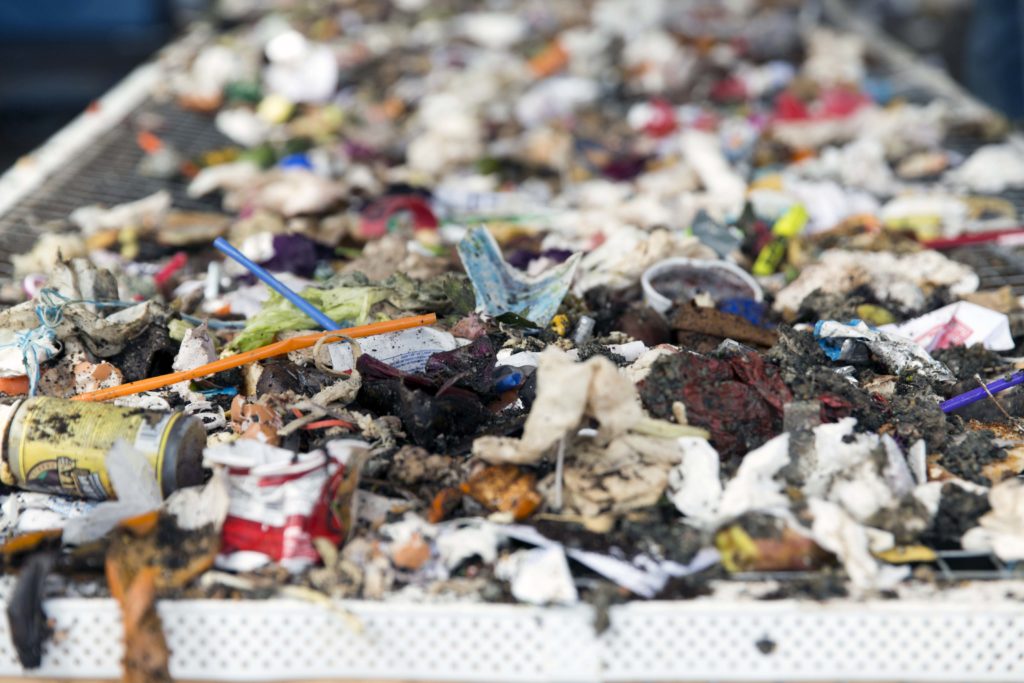
The global waste management market is shifting and the change is beginning to negatively impact the recycling industry in the United States. In Maine, a town in Hancock County plans to stop curbside recycling on Sept. 1, following a steep rise in the costs associated with the program. While some of the rising costs are associated with China’s ban on 24 waste items from the U.S. and other countries, some costs are due to so-called “dirty” recycling practices by consumers: items in the recycling stream that either cannot be recycled or are too expensive to clean and resell for profit.

Amy Brooks, a doctoral student in the New Materials Institute who co-authored a recent study on China’s ban of plastic imports, says that waste managers will have to seek new markets and solutions that can help mitigate the rising costs of recycling.

[button target=”_self” hover_type=”default” text_align=”left” text=”READ THE STORY” icon_color=”#ffffff” link=”https://bangordailynews.com/2018/08/13/business/how-chinas-green-wave-is-making-recycling-more-expensive-in-maine/?utm_source=eGaMorning&utm_campaign=75f19ffcb2-eGaMorning-8_13_18&utm_medium=email&utm_term=0_54a77f93dd-75f19ffcb2-86788021&mc_cid=75f19ffcb2&mc_eid=5268536ca9″ color=”#ffffff” background_color=”#ba0c2f” hover_background_color=”#ba0c2f” border_color=”#ba0c2f” hover_border_color=”#ba0c2f”]

Study: PHA is an eco-friendly alternative to petrochemical plastics

A recent study from the UGA New Materials Institute found that polyhydroxyalkanoate (PHA) material is an eco-friendly alternative to petrochemical plastics and effectively biodegrades in aerobic or anaerobic environments, such as a landfill, waste treatment facility or the ocean. The researchers examined PHA material developed by Danimer Scientific, which develops and manufactures biodegradable plastic products.

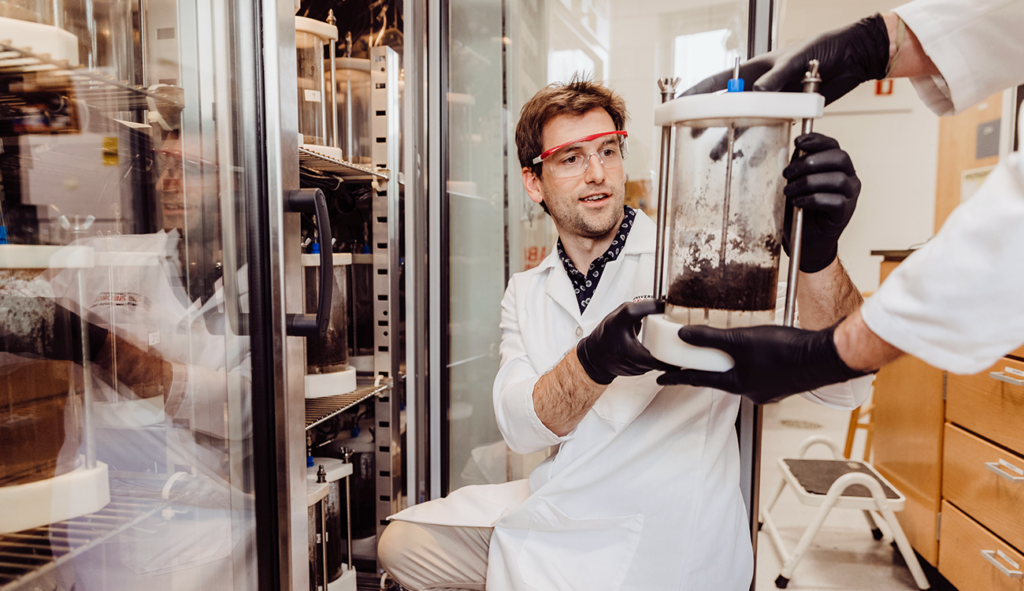
To determine how PHA biodegrades in a proper waste management scenario, researchers measured the gaseous carbon loss of PHA samples placed in anaerobic sludge after 40 – 60 days of incubation and compared the levels to those of cellulose powder in the same setting. The anaerobic degradation of PHA was not significantly different from that of the cellulose powder. In addition, the methane yields of PHA were found to be similar to food waste, which suggests the material could be effectively processed alongside common organic waste in a landfill.

The study, “Biodegradation of Poly(3-hydroxybutyrate-co-3-hydroxyhexanoate) Plastic under Anaerobic Sludge and Aerobic Seawater Conditions: Gas Evolution and Microbial Diversity,” was published in Environmental Science and Technology.

[button target=”_self” hover_type=”default” text_align=”center” text=”READ THE STORY” icon_color=”#ba0c2f” link=”https://www.bizjournals.com/atlanta/prnewswire/press_releases/Georgia/2018/08/07/FL72717?utm_source=eGaMorning&utm_campaign=aa0127eb15-eGaMorning-8_8_18&utm_medium=email&utm_term=0_54a77f93dd-aa0127eb15-86732729&mc_cid=aa0127eb15&mc_eid=640f7b745d” color=”#ffffff” hover_color=”#ba0c2f” background_color=”#ba0c2f” border_color=”#ba0c2f”]
[button target=”_self” hover_type=”default” text_align=”center” text=”READ THE STUDY” icon_color=”#ba0c2f” link=”https://pubs.acs.org/doi/10.1021/acs.est.7b06688″ color=”#ffffff” background_color=”#ba0c2f” border_color=”#ba0c2f”]

NMI’s Jambeck talks to NPR

Jenna Jambeck is co-director of the UGA New Materials Institute and an associate professor of environmental engineering.


Jenna Jambeck talked to NPR about her quest to help people comprehend the world’s plastic problem and to inspire solutions. Jambeck is co-director of the New Materials Institute and an associate professor of environmental engineering in the UGA College of Engineering.

[button target=”_self” hover_type=”default” text_align=”right” text=”READ THE STORY” icon_color=”#ba0c2f” link=”https://www.npr.org/2018/07/24/627505327/meet-the-woman-who-put-plastic-waste-on-the-map” color=”#ffffff” background_color=”#ba0c2f” border_color=”#ba0c2f”]

NMI research team calculates impact of China’s ban on plastic waste imports

Beach pollution. Plastic bottles and other trash on sea beach

Athens, Ga. – While recycling is often touted as the solution to the large-scale production of plastic waste, upwards of half of the plastic waste intended for recycling is exported from higher income countries to other nations, with China historically taking the largest share.

But in 2017, China passed the “National Sword” policy, which permanently bans the import of non-industrial plastic waste as of January 2018. Now, scientists from the University of Georgia have calculated the potential global impact of this legislation and how it might affect efforts to reduce the amount of plastic waste entering the world’s landfills and natural environment.

Their study was published in the journal Science Advances.

“We know from our previous studies that only 9 percent of all plastic ever produced has been recycled, and the majority of it ends up in landfills or the natural environment,” said Jenna Jambeck, associate professor in UGA’s College of engineering and co-author of the study. “About 111 million metric tons of plastic waste is going to be displaced because of the import ban through 2030, so we’re going to have to develop more robust recycling programs domestically and rethink the use and design of plastic products if we want to deal with this waste responsibly.”

Global annual imports and exports of plastic waste skyrocketed in 1993, growing by about 800 percent through 2016.

Since reporting began in 1992, China has accepted about 106 million metric tons of plastic waste, which accounts for nearly half of the world’s plastic waste imports. China and Hong Kong have imported more than 72 percent of all plastic waste, but most of the waste that enters Hong Kong—about 63 percent—is exported to China.

High income countries in Europe, Asia and the Americas account for more than 85 percent of all global plastic waste exports. Taken collectively, the European Union is the top exporter.

“Plastic waste was once a fairly profitable business for China, because they could use or resell the recycled plastic waste,” said Amy Brooks, a doctoral student in UGA’s College of Engineering and lead author of the paper. “But a lot of the plastic China received in recent years was poor quality, and it became difficult to turn a profit. China is also producing more plastic waste domestically, so it doesn’t have to rely on other nations for waste.”

For exporters, cheap processing fees in China meant that shipping waste overseas was less expensive than transporting the materials domestically via truck or rail, said Brooks.

“It’s hard to predict what will happen to the plastic waste that was once destined for Chinese processing facilities,” said Jambeck. “Some of it could be diverted to other countries, but most of them lack the infrastructure to manage their own waste let alone the waste produced by the rest of the world.”

The import of plastic waste to China contributed an additional 10 to 13 percent of plastic waste on top of what they were already having a difficult time managing because of rapid economic growth before the import ban took effect, Jambeck said.

“Without bold new ideas and system-wide changes, even the relatively low current recycling rates will no longer be met, and our previously recycled materials could now end up in landfills,” Jambeck said.

Writer: James Hataway

A Growing Awareness about the Need for Sustainable Packaging

The New Materials Institute’s Jenna Jambeck recently talked to Progressive Grocer about the affect local and national governmental policies are having on industry’s attitudes regarding plastic packaging.

[button target=”_self” hover_type=”default” font_style=”normal” text_align=”right” text=”READ THE STORY” icon_color=”#ffffff” link=”https://progressivegrocer.com/packaging-part-retailers-supply-chain-planning” color=”#ffffff” hover_color=”#ba0c2f” background_color=”#ba0c2f” hover_background_color=”#ba0c2f” border_color=”#ba0c2f”]

Jenna Jambeck is redesigning waste management

Right before Jenna Jambeck was returning to school to get her doctorate in environmental engineering in 2000, racing captain and oceanographer Charles Moore showed the industrialized world that its obsession with plastic had a cost.

Jambeck was disgusted.

Moore’s articles on the Great Pacific Garbage Patch described a swath of free-floating marine debris, much of it plastic, that is now twice the size of Texas. The discovery was horrifying evidence of the consequences of man’s fascination with disposable, prepackaged goods. But perhaps more horrifying was that the microplastic-filled soup of trash wasn’t the only one; it was just the first to be discovered.

“I felt like we were doing something wrong on land if our trash is ending up in the ocean,” says Jambeck, now an associate professor of environmental engineering at the University of Georgia. But a senior advisor at the time told her no one really cared that garbage was making its way from land into the world’s waterways. “Waste management in general, people haven’t really cared about that either.”  But to Jambeck, that was unacceptable.

[button target=”_self” hover_type=”default” font_style=”normal” text_align=”right” text=”READ THE STORY” icon_color=”#ffffff” link=”https://greatcommitments.uga.edu/story/turning-trash-into-treasure/” color=”#ffffff” hover_color=”#ba0c2f” background_color=”#ba0c2f” hover_background_color=”#ba0c2f” border_color=”#ba0c2f” hover_border_color=”#ba0c2f”]

NMI hosts planning workshop for UGA to become third site for Center for Bioplastics and Biocomposites

Demonstrating UGA’s broad expertise in polymer science, biochemical engineering, textiles and plant science, faculty members representing the New Materials Institute recently presented a range of project ideas as part of the NMI’s pitch to become a site for the Center for Bioplastics and Biocomposites, known as CB2.

Partha Pratim Sikdar, a graduate research assistant in the Department of Textiles, Merchandising and Interiors, talks to Dean Linda Kirk Fox of the College of Family and Consumer Sciences about the research he and Dr. Gajanan Bhat conduct on nonwoven materials made from recycled cotton. Dr. Bhat is the Georgia Athletic Association Professor of Fibers and Textiles and head of the department. Photo by Cal Powell.

If approved this fall, the NMI will become the center’s third site, joining Iowa State University and Washington State University, which formed CB2 three years ago as an Industry-University Cooperative Research Center, a program run by the National Science Foundation. The 10 project pitches were presented at a site planning meeting attended by industry representatives from 20 companies, the NSF and CB2.

“At Georgia, we are firm believers that it’s important for us to collaborate with industry partners, who are critically important to ensuring the widespread adoption of faculty inventions,” said Provost Pamela Whitten in her welcome address.

The NMI team will use the feedback from this planning ­meeting to shape its full NSF proposal, which will also require letters of commitment from industry partners.

The IUCRC program benefits industry and academia in several key ways. Industry members gain access to cutting-edge research, shared intellectual property, ongoing training and continuing education, and the ability to leverage investment opportunities. Universities benefit from knowing exactly what industry expects from a project through direct mentorship, which leads to long-term relationships with industry partners, future intellectual property and the direct exposure of students to potential employers.

In his comments to the group, NSF Program Manager Prakash Balan said that 30 percent of students who work on IUCRC projects are hired by an industry partner directly involved in their work. Industry partners pay annual membership fees to the center, 100 percent of which are used to fund projects. CB2 currently has more than 30 industry partners including Ford, Hyundai, John Deere, 3M, Myriant and ADM.

“Along with all of the great ideas and projects that come from our talented faculty, the NMI will also add value to CB2 by broadening the research focus to include sustainable packaging and bring industry partners that represent the Southeast region,” said Jason Locklin, director of the NMI and an associate professor of chemistry and biochemical engineering.

The planning meeting presentations were made by faculty from the Franklin College, the colleges of engineering and family and consumer sciences and the Complex Carbohydrate Research Center. Students also attended the meeting and presented 20 posters on related research work, further illustrating the scope of knowledge that UGA can add to CB2.

In his send-off message to the attendees, Vice President for Research David Lee pointed out that UGA already is a member of the IUCRC’s Center for Advanced Forestry Systems and that the university welcomes a future with CB2.

“Collaborating with industry is key to our land-grant mission of performing research that ultimately improves the lives of people everywhere, from Georgia and across the globe,” said Lee. “Having NMI as a site in CB2 will facilitate our interactions with industry, accelerate our innovations in the critical area of sustainable and green materials and encourage economic development and job growth.”

The CB2 planning meeting was supported by NSF grant #1738734.