New isotope ratio mass spectrometry system gives UGA SkIO an edge in assessing ocean health
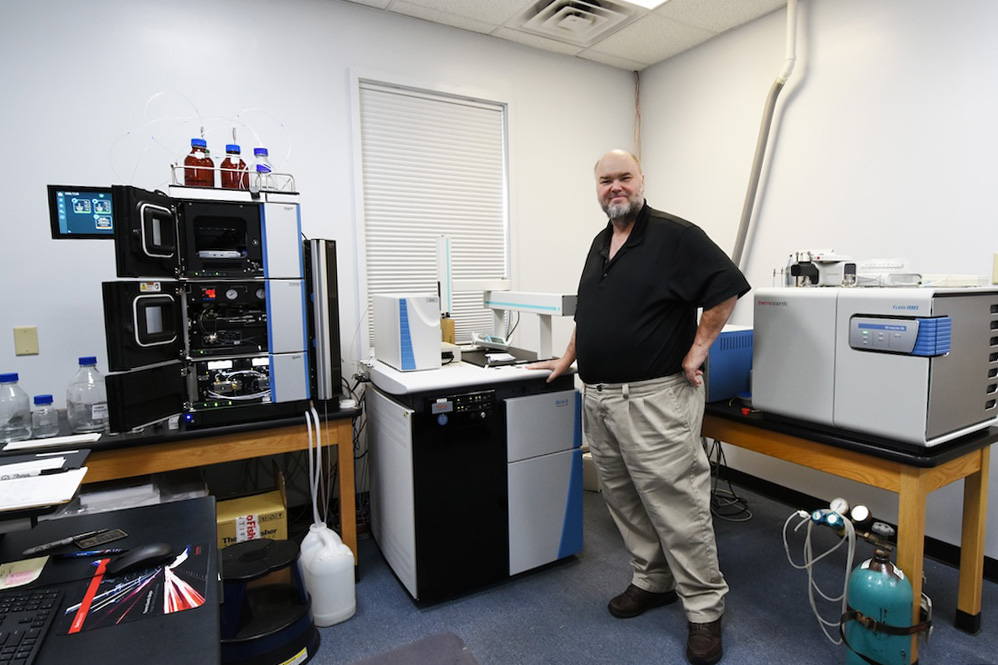
The UGA Skidaway Institute of Oceanography (SkIO) recently installed a new, advanced isotope ratio mass spectrometry system which offers enhanced capabilities for evaluating critical measures of ocean health.
The Thermo ScientificTM DELTATM Q Light Stable Isotope Mass Spectrometer was installed in the Skidaway Institute Scientific Stable Isotope Laboratory (SISSIL), which is directed by Jay Brandes, a professor of marine sciences at SKiO and a faculty member in the UGA New Materials Institute. The spectrometer offers unprecedented precision in evaluating solids and complex mixtures like amino acids or DNA for carbon, nitrogen and sulfur stable isotope content. The system reduces sample size requirements and introduces cutting-edge capabilities, including the first liquid chromatography interface of its kind installed in the United States.
At SkIO, this state-of-the-art technology is already being applied to critical research areas such as dissolved organic matter cycling, oceanic carbon cycling, and fish migratory patterns. Stable isotopes, often called the “magnifying glasses” of environmental science, allow researchers to uncover secrets about nitrogen sources and eutrophication, food webs, and ecosystem health.
The new spectrometer was funded by a $404,000 grant from the National Science Foundation.
Click on the link below to learn more about how this transformative technology is advancing marine science research, or to reach out to Dr. Brandes to inquire about SISIL and its services.