Generic selectors
Exact matches only
Search in title
Search in content
Post Type Selectors

Category: News

Study: PBG-PLA blends are less brittle, degrade faster in industrial composting

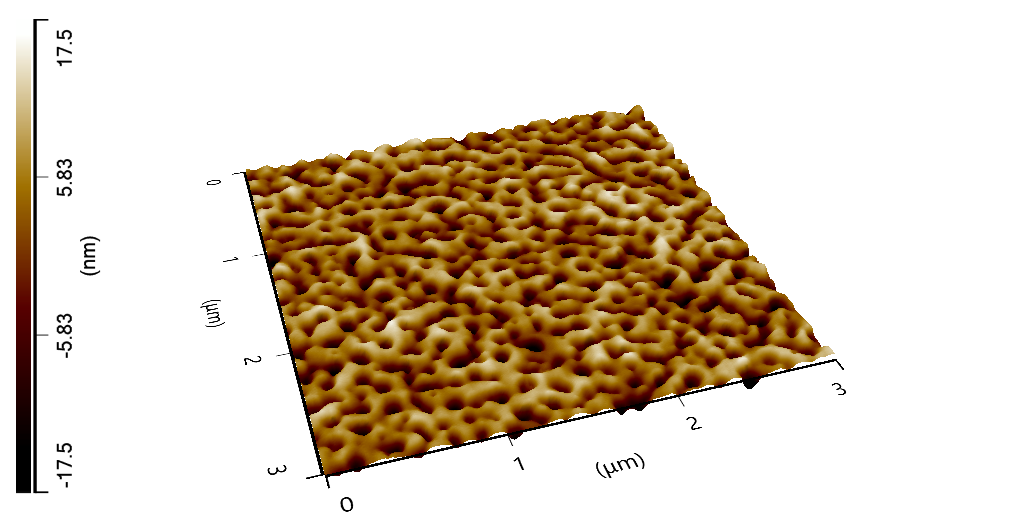
AFM image (3D height) of 15% PBG + 85% PLA, from UGA New Materials Institute.
AFM image (3D height) of 15% PBG + 85% PLA, courtesy of the Locklin Group at the UGA New Materials Institute.

Manufacturers that utilize polylactic acid (PLA) in products and packaging are well aware of the polymer’s drawbacks, including brittleness and slow degradation at end-of-life. Researchers the University of Georgia’s New Materials Institute have found a way to overcome these negatives of working with PLA, by blending the material with cost-effective poly(butylene glutarate) (PBG). The results of their new study offer manufacturers an alternative to utilizing petroleum-based additives that also improves upon the mechanical properties of PLA, and the PBG-PLA blends degrade at a faster rate in an industrial composting setting.

What do you know about composting? Take UGA’s survey by March 31.

2021 UGA Composting Survey graphic

Do you compost food or gardening waste? Do you know what compostable certification labels look like and what they mean when you see them on packaging? Regardless of your answers, if you live in the U.S., the University of Georgia’s New Materials Institute wants to know what you know about composting, and is asking members of the public to voluntarily complete a survey by March 31st.

“While access to municipal or private composting services is increasingly common in the U.S., public knowledge of how composting works and what people are composting is not well known,” said Jenna Jambeck, who is leading the research team conducting the survey. Jambeck is the Georgia Athletic Association Distinguished Professor in Environmental Engineering, and co-founder of the UGA New Materials Institute. “Individual municipal programs may be able to track levels of participation in composting programs, but disposal of compostable packaging and compostable products has not been a focus of many past surveys of consumers.”

This survey seeks to understand consumer activities around composting, especially related to food waste and compostable food serviceware and packaging. It also seeks to gauge the level of consumer awareness of bio-based, biodegradable and compostable certification labels; disposal actions that consumers associate with those labels; and whether these certification labels influence consumer perception of consumer brands and products.

Members of the public should be able to complete the survey in less than 10 minutes, and can take it from their cell phone or other device connected to the internet. All responses will remain completely anonymous. The researchers request that only one individual from a household take the survey on behalf of the household. Data gathered may be used in research publications or presentations given by UGA researchers, students, or UGA’s research partners.

The deadline to complete the survey is March 31, 2021.

“Thank you to everyone who takes time to complete the survey. The data will help inform the design of materials before they become waste,” said Jambeck.


About the UGA New Materials Institute:

The UGA New Materials Institute is committed to preventing waste through the design of materials and systems that adhere to Green Engineering principles. The Institute partners with industry and businesses to design materials for their use that are bio-based, fully biodegradable, or completely recyclable, and safe for people, animals and our planet. In addition, it works with businesses and governments, foundations and other organizations to redesign systems so that they generate less waste and promote circularity in materials management. The New Materials Institute is also shaping the future by training the next generation of scientists and engineers on the importance of considering Green Engineering design principles in everything they do. For more information, visit newmaterials.uga.edu.

UGA New Materials Institute Director Jason Locklin talks to NOVA about plastics

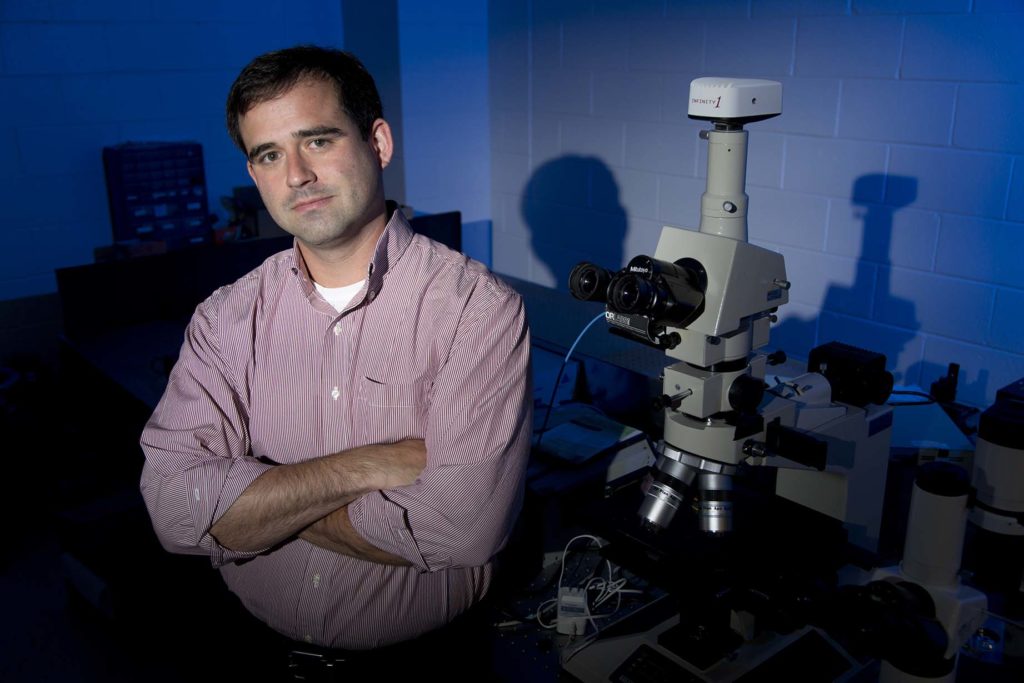
Director of the UGA New Materials Institute Jason Locklin stands with arms crossed beside a microscope in a dimly lit laboratory, reflecting on the problems with environmentally-persistent plastics used in packaging and solutions on the horizon.
Jason Locklin, PhD, is director of the UGA New Materials Institute. Professor Locklin is jointly appointed to the College of Engineering, where he is a Distinguished Faculty Scholar, and to the Department of Chemistry in the Franklin College of Arts and Sciences.

An interview with Jason Locklin, on the environmental problems associated with plastics and potential solutions for the near future, is featured in an episode of a three-part NOVA docuseries that premieres Wednesday, February 3. Locklin is director of the UGA New Materials Institute, which researches and develops compostable technologies to replace the environmentally persistent, petroleum-based plastics currently used in packaging for consumer goods and food items.

NOVA “BEYOND THE ELEMENTS,” hosted by David Pogue, examines our everyday world through the lens of chemistry. The series features three distinct, but related episodes: “REACTIONS,” “INDESTRUCTIBLE” and “LIFE,” airing on February 3 and 10 at 9 p.m. ET/8C and on February 17 at 8 p.m. ET/7C on PBS. The series is available for streaming online and via the PBS Video app.

BEYOND THE ELEMENTS brings hard-to-visualize concepts to life with the help of stunning graphics, giving viewers easy-to-understand insights into the question: “What happens when atoms stick together?”

The interview with Locklin appears in the “INDESTRUCTIBLE” episode that airs on February 10.

BEYOND THE ELEMENTS premieres Wednesdays, February 3 and 10 at 9 p.m. ET/8C and February 17 at 8 p.m. ET/7C on PBS and is available for streaming online and on the PBS video app.

NOVA “BEYOND THE ELEMENTS: REACTIONS”  (February 3, 2021 at 9 p.m. ET/8C on PBS) Just about every solid, liquid, or gas in the world as we know it begins with reactions between individual atoms and molecules. Host David Pogue dives into the transformative world of chemical reactions, from the complex formula that produces cement to the single reaction that’s allowed farmers to feed a global population by the billions—a reaction that when reversed, unleashes the powerful chemistry of high explosives.

NOVA “BEYOND THE ELEMENTS: INDESTRUCTIBLE” (February 10, 2021 at 9 p.m. ET/8C on PBS) Glass so strong you can jump on it, a rubber-like coating tough enough to absorb a bomb blast, the endless varieties of plastic. Scientists and engineers have created virtually indestructible versions of common materials by manipulating the chains of interlocking atoms that give them strength—but have they made them too tough? Host David Pogue explores the fantastic chemistry behind the everyday materials we depend on, and how the quest for durability can be balanced with products’ environmental impact.

NOVA “BEYOND THE ELEMENTS: LIFE” (February 17, 2021 at 8 p.m. ET/7C on PBS) Without the chemistry of photosynthesis, ozone, and a molecule called Rubisco, none of us would be here. So how did we get so lucky? To find out, host David Pogue investigates the surprising molecules that allowed life on Earth to begin, and ultimately thrive. Along the way, he finds out what we’re all made of—literally.

UGA scientist leads effort to help flexible films fully transition to compostable technologies

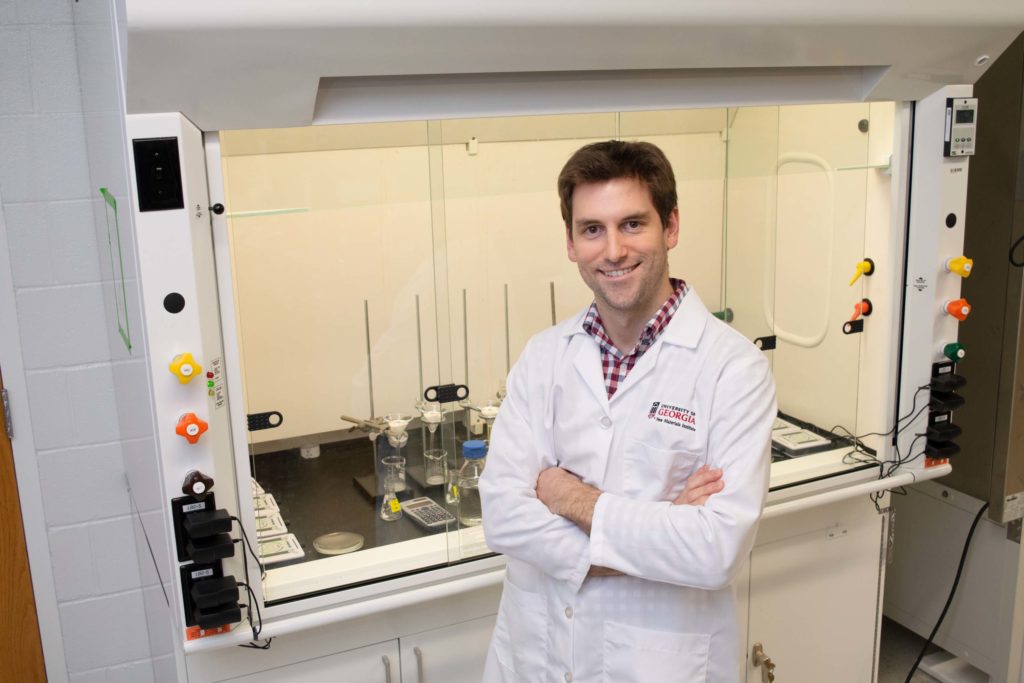
Evan White, PhD, of the UGA New Materials Institute.
Evan White, of the UGA New Materials Institute, leads a fund-raising initiative aimed at helping the flexible films industry transition toward greater sustainability in packaging films used for consumer goods and food packaging. The initiative resulted from the Redesigning Flexible Films Innovation Workshop, held virtually throughout 2020, which involved White and more than 80 experts. Photo by Amy Ware.

Evan White, of the UGA New Materials Institute, is leading an initiative to establish a nonprofit organization to raise money for research and development of compostable technologies for the flexible films industry to help facilitate the industry’s transition toward greater sustainability in packaging for consumer goods and food packaging.

The initiative, “Crowdfunding for Research & Development of New Compostable Materials,” is one of nine incubation projects resulting from a virtual workshop held throughout 2020 involving White and more than 80 experts—including polymer scientists, resin producers, retailers, waste managers, soil experts and other industry professionals. The Redesigning Flexible Films Innovation Workshop participants included representatives from the UGA New Materials Institute, Dr. Bronner’s, Eco-Cycle, Mars, New Hope Network, PepsiCo, Ben & Jerry’s, and Amy’s Kitchen, among others.

The result of their efforts are broadly outlined in a white paper titled “Uncovering the Next Innovation Curve in Sustainable Packaging.” The white paper creates a framework to move industry toward zero-waste packaging by transitioning away from traditional plastic flexible films, materials that have been a rapidly growing packaging format with no end-of-life option. Flexible films currently utilized by industry include bags, wraps, multilayer packaging, air pouches, and most packaging used for food. Benefits of flexible packaging include the delivery of safe and affordable food to consumers, and reduction of  emissions from transportation and food waste. Despite these benefits, the flexible films currently in use are the most environmentally deleterious form of packaging and have a limited recycling future—and, therein lies the paradox. In his role as a workshop participant, White, who is director of the New Material Institute’s Bioseniatic℠ Laboratory, advocated for compostable technologies as replacement options for these materials.

“The problem with flexible films currently in use is their end-of-life scenario,” explained White. “They are not recycled because they easily gum up the recycling sorters and grinders. Their light weight means the films have no value to recyclers, and flexible films are often contaminated with food residue, which bars them from recycling. This type of light-weight packaging is carried easily by the wind and therefore is widely distributed into the environment. These films are used by industry because they are inexpensive. Industry needs an inexpensive, responsibly-sourced alternative to this type of commonly used plastic.”

The non-profit fundraising arm that White and his team will create will be an independent entity. White is currently forming a board of directors and creating organizational bylaws. More details will be released later this year. The goal is to publish advances that benefit the flexible film industry, and, to raise funds for research and development aimed at tackling three key lingering problems with multilayer films and the flexible packaging industry: compostable energy curable varnishes; compostable inks; and new barrier layers to replace aluminum metalized packaging currently used in chip bags and other single-use applications.  Until now, certification agencies have tolerated minimal levels of these materials in packaging, but this acceptance will be gradually phased out as industry moves toward sustainability goals set for 2030.

The virtual workshop was produced by RCD Packaging Innovation, a supply and innovation firm that specializes in packaging solutions to eliminate waste and care for our planet; support was provided by OSC. To download a free copy of the white paper, click here.

UGA, BASF to conduct biological degradation studies for DOE-funded project

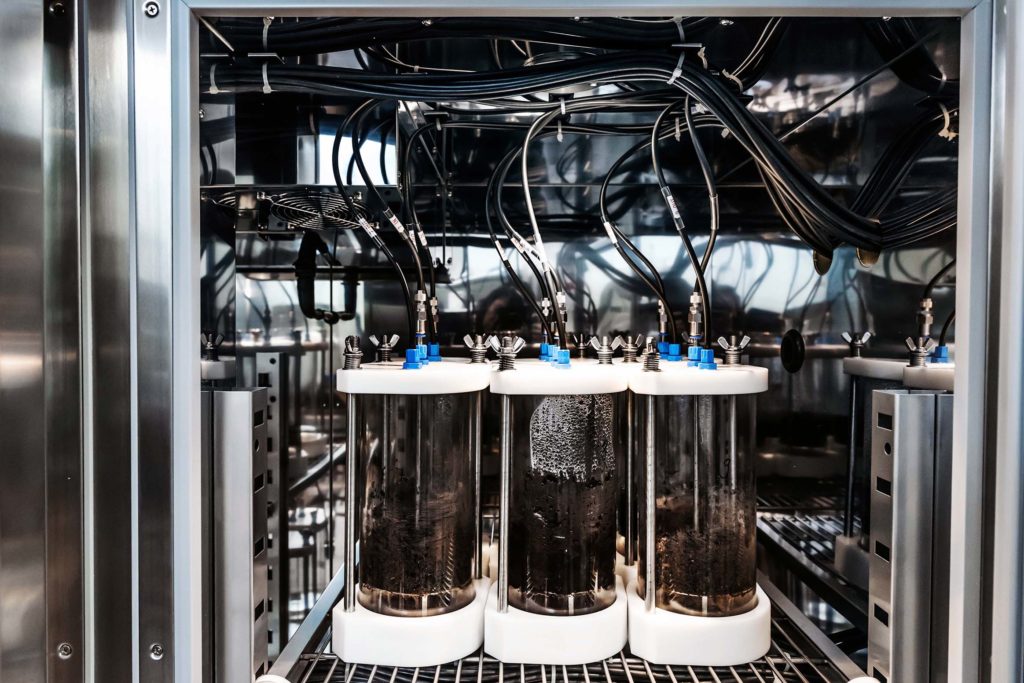
A respirometer at the UGA New Materials Institute.
Biological degradation studies are conducted in a respirometer, in which each individual chamber simulates an environment where materials are broken down by microbes that live in that environment. The UGA New Materials Institute has constructed some of the largest respirometers in North America for its biological degradation studies, totaling 192 chambers for environmental simulation. Photo by Cassie Wright.

The University of Georgia New Materials Institute will collaborate on a U.S. Department of Energy-funded research project to explore and optimize strains of bacteria for use in the creation of biologically degrading thermoplastic for polyurethanes and their byproducts. The UGA team, led by Jason Locklin, who directs the Institute, will work with a team from BASF (www.basf.com) to conduct the biological degradation studies for the grant project.

The US DOE awarded $2 million in grant funding to Jon Pokorski and Adam Feist, both researchers from the University of California San Diego, to fine-tune their innovation for thermoplastic polyurethanes and related byproducts. The UGA-BASF team will utilize about a quarter of that funding, over 3 years, to ensure that the material meets the biological degradation requirements specified by the US DOE. The BASF team will be led by Arif Rahman, a thermoplastic polyurethane researcher at the company.

“It’s an honor to be asked by my colleagues at UCSD for help with their project, and it is a tremendous advantage for us to be able to conduct these biological degradability studies with a team from BASF” said Locklin. “Working in tandem with industry means we are all focused on fine-tuning a technology that will be launched into the global marketplace where it can replace current plastics technologies that are accumulating in our landfills and environment.”

BASF and the UGA New Materials Institute have already developed a good working relationship over the last few years, through BASF’s participation as a member company of the Center for Bioplastics and Biocomposites (CB2). CB2 is an Industry-University Cooperative Research Centers program funded by the National Science Foundation, and the UGA New Materials Institute serves as one of four research sites for CB2.

The project “Degradable Biocomposite Thermoplastic Polyurethanes” was funded through the DOE’s BOTTLE program: Bio-Optimized Technologies to Keep Thermoplastics out of Landfills and the Environment; the program isjointly funded by the Office of Energy Efficiency and Renewable Energy’s (EERE) Bioenergy Technologies Office and Advanced Manufacturing Office. The project is part of the DOE’s Plastics Innovation Challenge, which draws on the research capabilities of DOE National Laboratories, universities, and industry to accelerate innovations in energy-efficient plastics recycling technologies.

Biodegradable. Compostable. Recyclable. How helpful are product label claims?

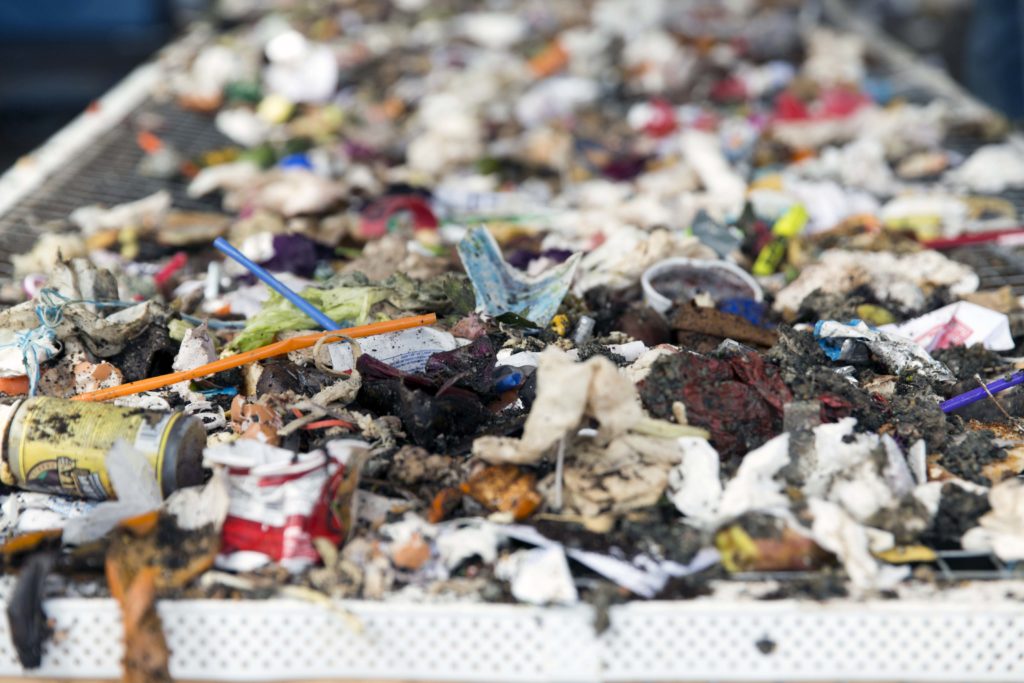
A contaminated recycling stream.
Products and packaging labeled as “biodegradable” or “compostable” can confuse consumers and contaminate recycling streams. (Photo by Andrew Davis Tucker/UGA)

Creating plastics, particularly packaging, is a complex endeavor. For example, multiple materials may be required to create packaging for a product, based on how far that product has to travel, how long its shelf life might be, and whether it’s packaging for a food item. So, if you are a consumer who is concerned about selecting environmentally-friendly packaging and products, what do you do? Are the claims made on product packaging clear enough to help you make the best decision when it comes time to dispose of that packaging or product? Jason Locklin, director of the UGA New Materials Institute, and Jenna Jambeck, who leads the Institute’s Center for Circular Materials Management, talked to the New York Times about the complicated choices facing today’s consumers.

Locklin, Jambeck help lead effort to shape circular economy research

The University of Georgia New Materials Institute’s Jason Locklin and Jenna Jambeck are collaborating on a virtual workshop series aimed at shaping the future of circular economy research. Locklin, a professor of chemical engineering and founding director of the New Materials Institute, and Jambeck, a professor of environmental engineering and associate director of the Institute, will join experts from academia, industry, government and nonprofits in panel discussions aimed at developing ideas and goals for circular economy research. The workshop series is funded by the National Science Foundation and is led by Melissa Bilec, an associate professor of civil and environmental engineering at the University of Pittsburgh’s Swanson School of Engineering; Bilec is deputy director of the Mascaro Center for Sustainable Innovation (MSCI). Other co-investigators on the grant include Eric Beckman, a professor of chemical engineering and co-director of the MCSI, and, Gregg Beckham, senior research fellow at the National Laboratory of the Rockies.


Students and Industry Partnering for the Planet: When Waste Leads to Good Business (from VentureWell’s blog)

Examples of innovative collaborations took center stage at a recent VentureWell virtualOPEN conference session on supporting sustainable design and addressing environmental issues. Attendees heard from Crystal Leach, director of Industry Collaboration at the University of Georgia’s New Materials Institute (NMI); Faculty Grants recipient, Chad Kennedy, a lecturer in the technology, entrepreneurship, and management program at The Polytechnic School at Arizona State University (ASU); and Faculty Grants recipient, Volker Sick, director of the Global CO2 initiative and an engineering professor at the University of Michigan (UM) Ann Arbor. 

New Materials Institute pioneering replacements for plastic

Dr. Evan White working in the UGA New Materials Institute's Bioseniatic℠ Laboratory.
Evan White, assistant research scientist at the UGA New Materials Institute, uses respirometry to characterize how plastics are biologically converted into innocuous compounds. White and his colleagues at the UGA NMI are working to develop materials and plastic replacements that completely break down and return to nature when discarded. (Photo by Beth Chang)

For Evan White, growing up outside Atlanta meant witnessing significant changes in his landscape. His hometown of Lilburn, Georgia, tripled its population between 1980 and 2000, and White watched as nearby woods became neighborhoods and parking lots. He saw trash, much of it plastic, accumulate in the streams and tributaries where he played.

“You don’t have to go very far into nature to see the evidence of human expansion,” said White, now an assistant research scientist at UGA. “Different particles of plastic will wind up at a final resting place according to their chemical reactivity and their density. Most of these plastics like to float on water, and they go where the water goes.”

These formative experiences greatly influenced his career path, leading him to the university’s New Materials Institute, directed by Jason Locklin, and its Center for Advanced Polymers, Fibers & Coatings. White is part of a team focused on a single goal: to develop materials and plastic replacements that completely break down and return to nature when discarded.