
A quest for spiders and new materials
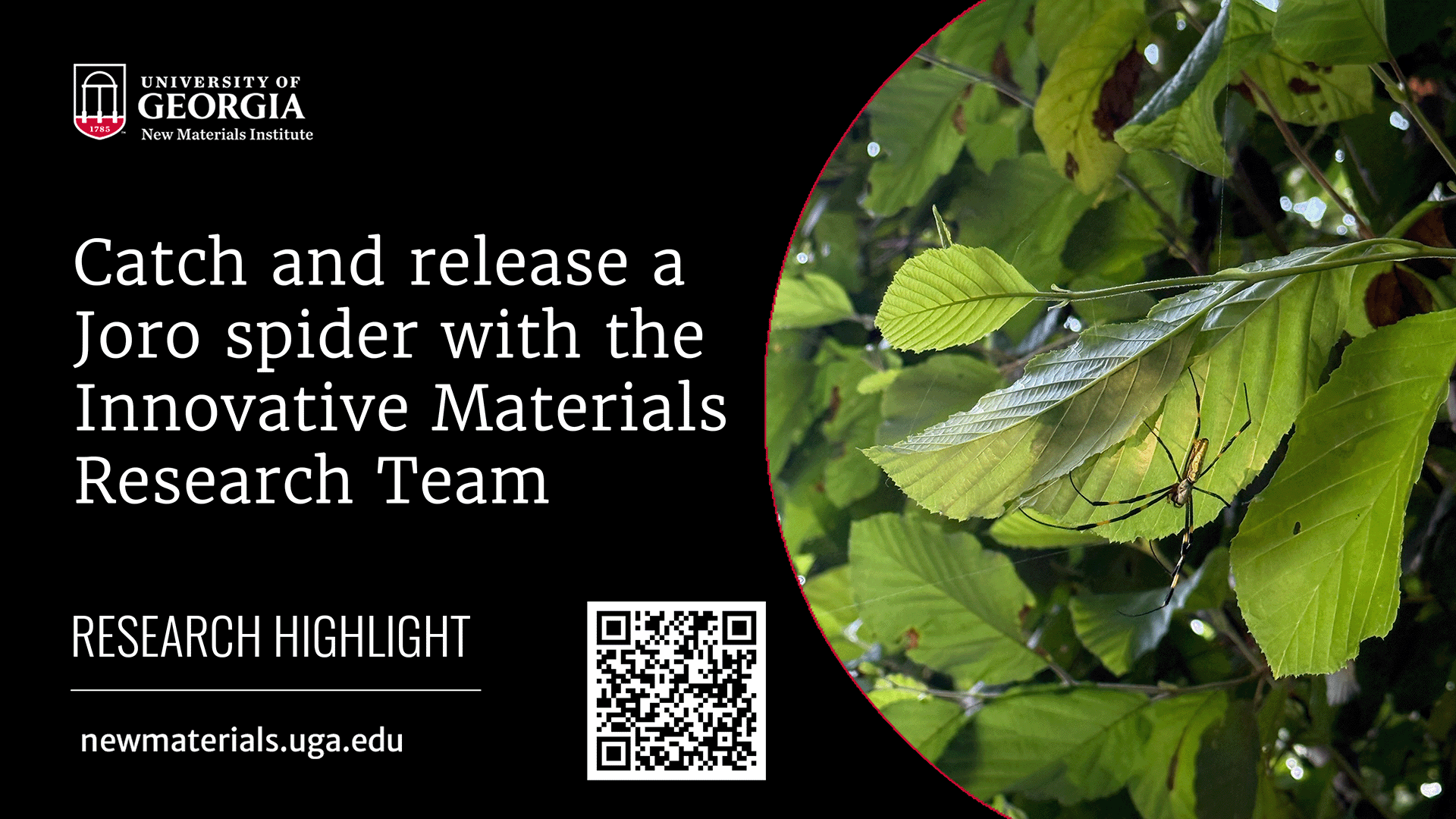
Spider silk is a strong material with unique properties that vary by species and sex. Some species produce up to seven different types of silk, each with unique functions.
At the UGA New Materials Institute, the Innovative Materials Research Team directed by Suraj Sharma, a professor of polymer, fiber, and textile sciences, is working with Joro spiders to explore new, sustainably based materials for use in textiles and packaging.
The Joro spider (Trichonephila clavata), first identified in Northeast Georgia in 2014, is a thriving and quickly spreading species in North America. It is classified as an invasive species in North America, though researchers are still studying the full extent of its ecological impact on native wildlife and ecosystems. These large orb weavers, native to Asia, are frequently found from late summer into early fall. Egg-laying season runs from mid-October through November, and each egg sac contains 400-500 eggs.
For the Sharma research team to work with Joros, they first must collect them from the wild. Having never searched for spiders ourselves, we thought it would be a fun and educational experience to join team members on a spider search. So, off we went, just after dawn on a hot morning in late August.
Among the things that impressed us: Cautious planning by Sharma and his team, to facilitate safe capture of the little creatures, while causing them as little stress as possible and still enabling us to be present and close enough to shoot video. The growing bank of knowledge the Sharma team is building about these spiders and their potential contributions to society. The incredible respect the researchers have for these otherwise seemingly spooky individuals; the researchers can leap right past the “Ick!” factor and straight to wonder, fascination, and possibilities. And, most of all, the care and compassion the team members have for these spiders: Every spider caught is taken back to the lab to rest and acclimate prior to sharing silk for the team’s research endeavors. After each silk extraction, the spiders are allowed to rest and are fed snacks. After several extractions, naps, and snack sessions, each spider is taken back to the location where it was captured and carefully released back into the wild.
We are working on a video series about the Sharma team’s research with these spiders and plan to share that with you in the coming months. For now, spend part of a morning with us as we search for, capture, and carefully release these incredible creatures back into their native habitat.